

Why Merino Wool Doesn't Itch
The science behind soft wool
Many people remember a woolen sweater from their childhood that itched all day long. That experience runs deep, and it still colors how we think about wool today. Yet the conclusion doesn't quite hold up. The question of why merino wool doesn't itch has little to do with wool itself and everything to do with the physical properties of a fiber. This article explains what exactly happens on the surface of your skin, what role fiber thickness plays, and why the common assumption that wool simply itches is not scientifically sound.
In short
- The reason merino wool doesn't itch has a simple scientific explanation: the itchy feeling doesn't come from the type of fiber, but from its thickness. Coarse fibers itch, fine fibers don't.
- Research places the irritation threshold around 30 to 32 microns. Fibers thicker than that are stiff enough to irritate the nerve endings in your skin.
- Merino is one of the finest natural fibers and stays well below that threshold. The fibers bend with your skin instead of poking into it.
- Wool is not an allergen. The old association between wool and itching comes from coarse fibers, not from the material itself.
- Synthetic fibers also itch when they're coarse. The problem is mechanical, not chemical.
What actually causes that itchy feeling?
Textile itching is not an allergic reaction. It's a mechanical phenomenon. When a fiber end presses against your skin, there are two possibilities. Either the fiber bends away, and you feel nothing. Or the fiber is stiff enough to hold its shape and poke into the skin, activating the pain receptors just below the skin's surface. Your brain registers the latter as itching or irritation.
What matters, then, is not whether a fiber is wool, cotton, or acrylic. What matters is how stiff the end of that fiber is. And stiffness is almost entirely related to thickness. According to the Woolmark Company's explanation of merino wool softness, the itchy feeling comes from coarse fibers of any type. It's a common misconception to blame wool as the cause. The cause is coarseness.
The role of fiber thickness: it all comes down to microns
Fiber thickness is measured in microns. A micron is one millionth of a meter, or 0.000001 meters. As the International Wool Textile Organisation describes wool, the micron value refers to the average diameter of individual fibers. The lower that number, the finer the fiber, and the softer the material feels.
Merino stands out here. According to the Woolmark Company on what merino wool actually is, this Australian fiber is considered the finest and softest sheep's wool in the world, with a significantly lower micron value than coarse wool types. For comparison: a human hair is usually many times thicker than a merino fiber. That fineness is not a marketing claim but a measurable property, documented with optical measuring instruments that analyze thousands of fibers per sample. If you want to dive deeper into what that means in practice for warmth, moisture regulation, and wearing comfort, also read the overview of merino's properties.
The irritation threshold: why 30 microns is the tipping point
There is a fairly sharp boundary above which fibers start to itch. An extensive scientific review in the journal Acta Dermato-Venereologica, titled Debunking the Myth of Wool Allergy, brought together a hundred years of research. The conclusion is clear. Skin irritation from textiles is associated with fibers with a diameter of approximately 30 to 32 microns or more. Fibers above that threshold are stiff enough to activate the nerve fibers in the skin. Superfine and ultrafine merino stays well below that and doesn't irritate those nerve fibers enough to cause itching.
The physics behind it is remarkably unforgiving. The force needed to bend a fiber increases sharply as the fiber gets thicker. A small increase in diameter thus results in a much larger increase in stiffness. That's why the difference between a coarse wool sweater and a fine merino sweater is not subtle but fundamental. One pokes, the other bends.
Why merino bends instead of itches
Fineness is half the story. The other half lies in the structure of the fiber itself. Merino wool is made of keratin, the same flexible protein found in human hair and nails. That protein structure makes the fiber elastic. It stretches, springs back, and bends without breaking.
On top of that, merino has a natural crimp. That waviness traps air, which contributes to insulation, but it also makes the fiber supple against the skin. The result is a textile you can wear directly on your skin without itching. Merino makes up roughly one percent of all fibers for clothing worldwide, a small share that goes almost entirely into comfortable, high-quality garments.
The persistent myth: I'm allergic to wool
Few textile myths have such staying power as this one. In a global consumer survey, 43 percent of people who didn't want to buy wool said they found wool too itchy, too irritating, or too uncomfortable. A significant portion even spoke of a wool allergy. Yet the evidence for that allergy is almost entirely absent.
The aforementioned review found no evidence that the wool fiber itself is an allergen. The Woolmark Company's analysis of wool allergy reaches the same conclusion: irritation is caused by coarse fibers sticking out of the fabric, and that cause is independent of fiber type. A coarse acrylic or nylon fiber can have exactly the same effect. In fact, research shows that superfine merino is skin-friendly enough to be used as an aid for eczema. What generations saw as typical of wool was actually a problem of fiber thickness.
Merino, cashmere, and synthetic: a straightforward comparison
To make it concrete, it helps to lay fibers side by side. The numbers below are indicative and vary by garment, but the ratio is correct. What matters is whether a fiber falls below or above the irritation threshold.
| Fiber | Typical diameter | Below the irritation threshold? | Note |
|---|---|---|---|
| Superfine merino | well under 20 microns | Yes | Bends with skin, suitable for direct skin contact |
| Cashmere | comparably fine | Yes | Soft, but usually less elastic than merino |
| Coarse sheep's wool | 30 microns and higher | No | Stiff ends cause the classic itchy feeling |
| Coarse synthetic (acrylic, nylon) | varies, often coarse | Varies | Can be just as itchy as coarse wool when the fiber is coarse |
The table makes something clear that contradicts the old reflex. It's not wool versus synthetic that determines comfort, but fine versus coarse. A cheap synthetic sweater can be itchier than a fine merino sweater. For those who want to understand how to choose a sweater where that fineness is preserved, the complete guide to a merino sweater offers a practical starting point.
Does merino always stay soft?
The softness of merino lies in the diameter of the fiber, and that diameter doesn't change through wearing or washing. A merino sweater that doesn't itch now won't suddenly start itching after a few months. What can happen is that improper care damages the structure of the knit, making the fabric feel rougher. That's a matter of washing and drying, not the fiber itself. The fineness is permanent. The comfort you feel on day one is the same comfort you'll feel years later, as long as the garment is treated with care.
Frequently asked questions
Does merino wool really never itch?
Superfine merino typically doesn't itch because the fibers stay well below the threshold of approximately 30 microns and therefore bend with your skin instead of poking into it. People with very sensitive skin may experience differences, but the cause would then be the finishing or a possible coarser blend, not merino itself.
At what micron count does wool start to itch?
Research places the tipping point around 30 to 32 microns. At that diameter, fiber ends are stiff enough to activate the nerve endings in the skin. Below that, fibers bend away and the feel remains soft.
Can you be allergic to merino wool?
According to available scientific literature, a true allergy to the wool fiber is extremely rare to not demonstrated. What people experience as an allergy is almost always mechanical irritation from coarse fibers. With fine merino, that mechanism doesn't apply.
Why did my old wool sweater itch but merino doesn't?
That old sweater was almost certainly made from coarser wool, with many fibers above the irritation threshold. Merino uses much finer fibers, so the same material type provides a completely different wearing experience.
Does merino become less soft after washing?
Fiber thickness doesn't change through washing, so softness is in principle retained. A wash that's too hot or drying that's too rough can damage the knit and make the fabric feel rougher. With proper care, merino retains its original softness.
Why merino wool doesn't itch, in summary
It all comes down to a single number: the diameter of the fiber. Merino wool doesn't itch because the fibers are too fine to irritate your skin. They stay below the threshold at which a fiber becomes stiff enough to activate pain receptors, and instead of poking, they simply bend away. Whether the garment is made of wool doesn't matter. Whether the fiber is fine matters everything. Once you understand that, you'll look differently at the old sweater in your closet and differently at what wool can be.
About Meedin
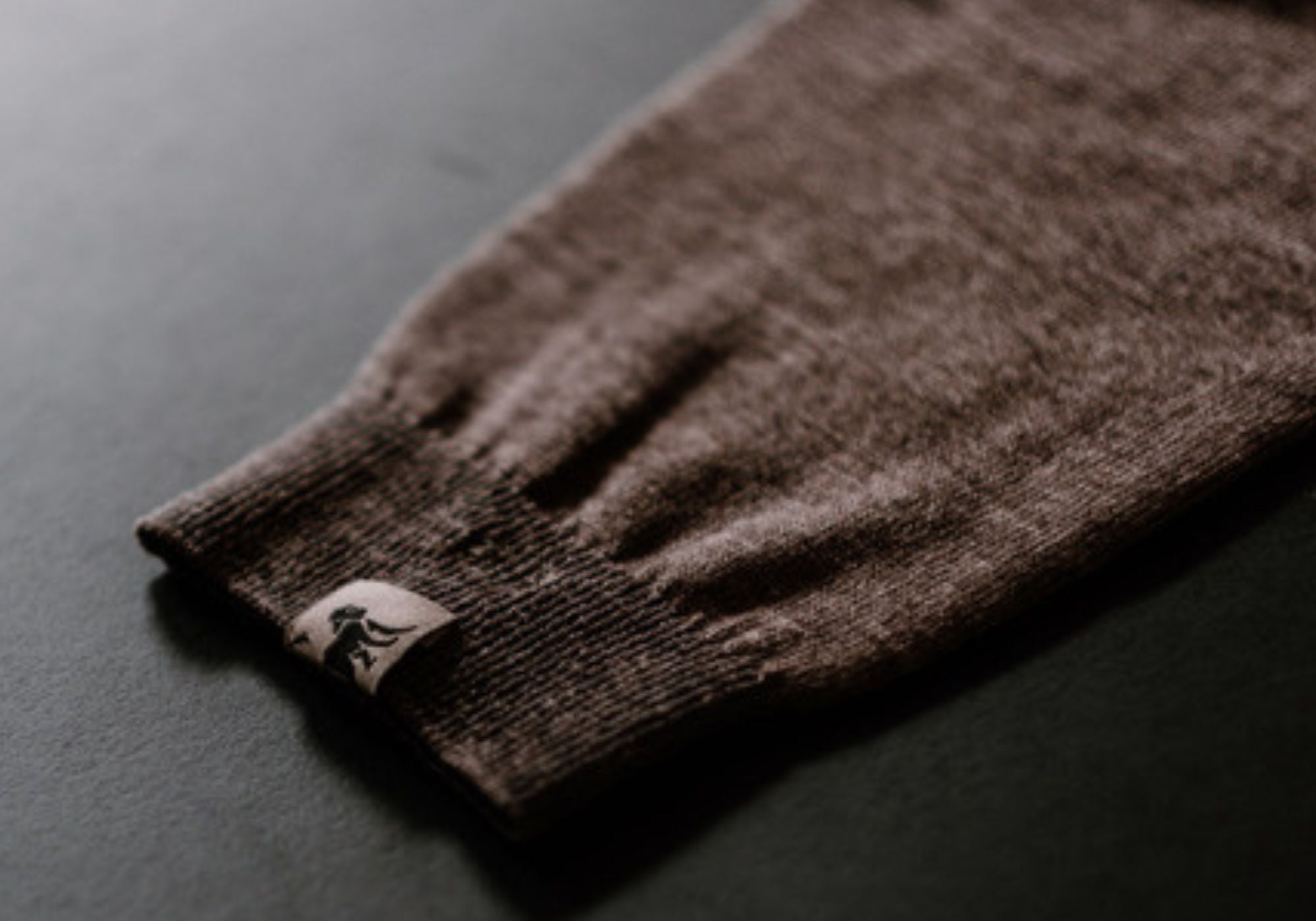
Meedin makes seamless merino sweaters for men, produced in the Netherlands in its own workshop in Staphorst. The wool comes from Australia and each sweater is knitted in one piece, without side seams and without a label in the neck. The care label is in the left sleeve. Check out our merino sweaters for the current collection.