

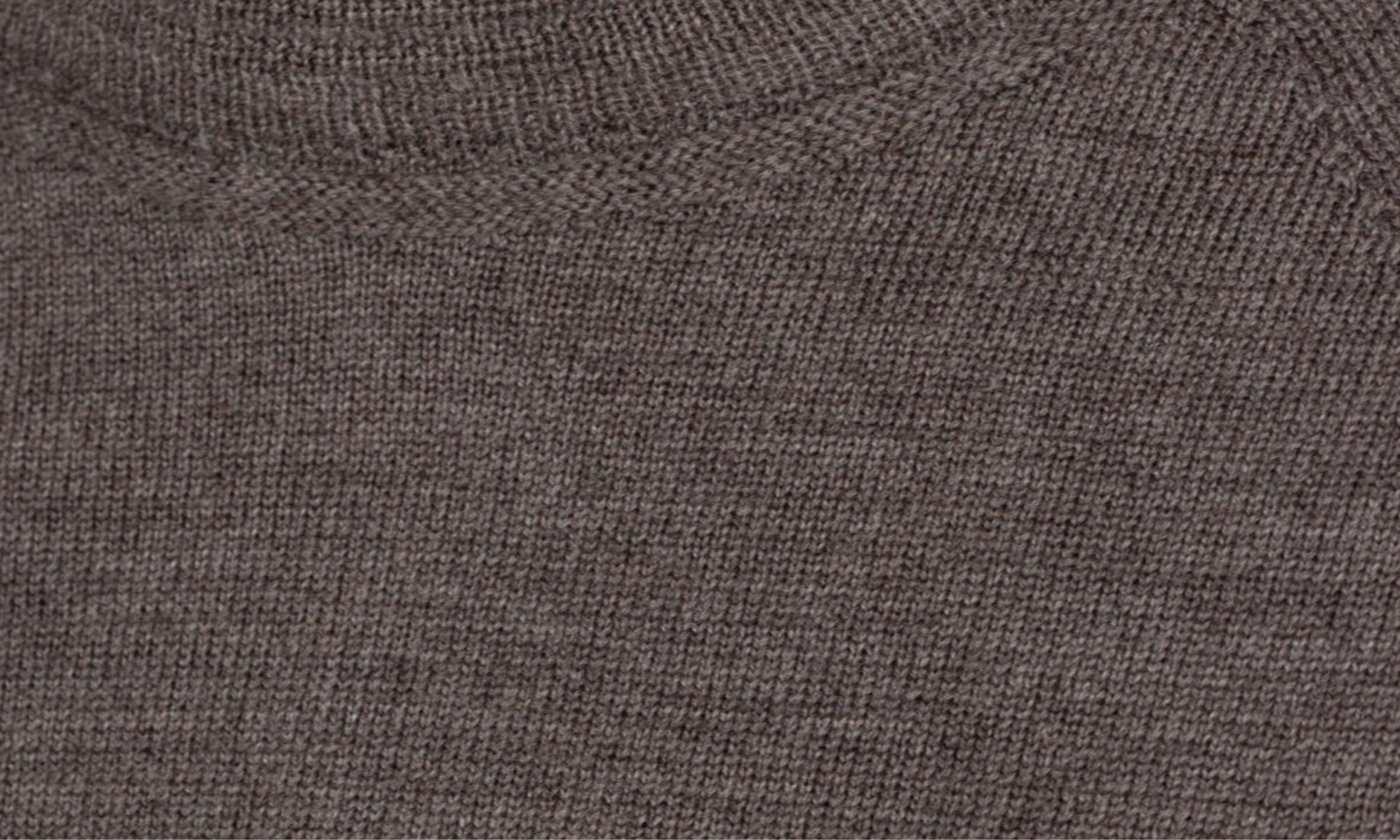
Merino wool properties
The 7 benefits that make this fibre unique
- Merino wool has a fine fibre diameter, typically between 17 and 23 microns, which makes the wool feel soft against the skin.
- The fibre regulates temperature in both directions: warm in cold months, cool in higher temperatures.
- Merino wool absorbs moisture up to about a third of its own weight without feeling damp.
- The natural structure of the fibre helps prevent odour, so you can wear a sweater several times without washing it.
- With proper care, merino wool retains its shape, colour, and softness for years.
- At Meedin, the fibre is made into seamless knitted sweaters, fully produced in the Netherlands.
Wool has an old-fashioned reputation. It itches, shrinks, and is high-maintenance. That image is true for some types of wool, but not for merino. The qualities and benefits of merino wool are fundamentally different from those of standard wool, and the difference lies in the fibre itself. We work with it every day in our workshop in Staphorst, and we notice how stubborn the assumptions about wool still are.
Below are seven qualities that set merino wool apart, and what they mean in practice for the garment you actually wear.
1. A fine fibre that does not itch
The most practical difference between merino wool and regular wool is the thickness of the fibre. Classic sheep's wool often measures 30 microns or more. With merino, the diameter is typically between 17 and 23 microns. Almost half, then. The finer the fibre, the more smoothly it bends against the skin, and the less the wool itches.
That means you can wear merino directly against the skin, without a base layer. It sounds simple. And it is. But it is exactly why most people who have ever tried a good merino sweater no longer have any hesitation about wearing wool next to the body.
2. Temperature regulation in both directions
The fibre is crimped at the micron level. Air stays trapped between those crimps, and that air insulates. That explains why a thin merino sweater feels warmer than a T-shirt of similar weight. At the same time, the structure lets heat escape when the body needs it to.
In practical terms: one good merino sweater covers a large part of the year. In winter under a coat, in the in-between seasons as the only layer, and on cooler summer evenings without overheating. For anyone who values a wardrobe with fewer pieces, this is the strongest argument.
3. Moisture regulation: the body stays dry
Merino wool absorbs moisture up to about a third of its own weight before the fibre starts to feel damp. Synthetic fibres repel moisture at the surface. Wool moves it through the fibre and releases it into the outside air as vapour.
You notice the difference especially when your activity changes. A bike ride, a quick sprint to the train, a meeting room that is warmer than expected. With synthetic material, you feel the chill of sweat immediately. With merino, the surface of the fabric stays largely dry, and so does the skin underneath.
4. Odour-resistant thanks to its natural structure
Odour develops when bacteria settle in damp fabric and feed on skin particles there. Wool blocks this process in two ways. The natural fatty layer of the fibre works antibacterially, and the structure of the fibre keeps moisture away from those bacteria.
The practical result: you wash your merino sweater less often than you are used to. Wear it for a day, air it overnight, wear it again. For many people, that lasts about a week before the sweater really needs a wash. For anyone who wants to know the best way to handle that, we have a separate guide to caring for merino wool prepared.
5. Shape retention and resilience over the years
Merino is a resilient fibre. The crimp works like memory: after folding or compression, the fibre returns to its original shape. A good merino sweater dried flat has no creases, no sagging elbows, no stretched-out cuff. At least, not if the construction is right.
And there is a nuance here. A sweater that fits well in the shoulders but is poorly made will still stretch at the seams. That is why we use whole-garment knitting (also known as 3D knitting): the sweater is knitted in one piece, without side seams, with the hem and cuffs integrated directly into the knit. That gives the fibre the performance it was made for. If you want to know more about how this technique changes the choice of a sweater, read the complete merino guide.
6. Naturally flame-retardant
Wool catches fire with difficulty, does not melt, and self-extinguishes when no more oxygen reaches it. That is a natural property of keratin, the protein the fibre is made of. Synthetic materials such as polyester already melt at low temperatures and stick to the skin. For most everyday situations, this difference is not very relevant. In specific contexts (crew members on board, military clothing, base layers for outdoor use), it is precisely the reason wool is still preferred over synthetic alternatives.
7. Renewable and biodegradable
Sheep produce a new fleece every year. Merino wool is therefore a renewable raw material, unlike synthetic fibres based on petroleum. At the end of its life, the fibre breaks down in the soil without leaving microplastics behind.
A property that often comes up in conversations about sustainable fashion, but we only see it as relevant when combined with the garment's lifespan. A disposable item made from renewable raw material is still a disposable item. The difference is made when a sweater lasts for years.
What these qualities together mean for a sweater
The sum of these seven points explains why merino wool has been used for decades for clothing where performance matters. Mountain sports, base layers for extreme cold, underwear for long trips. But that same fibre also works in an ordinary sweater for an ordinary workday. You feel it in wearing comfort, not as a statement.
At Meedin, we use one hundred percent merino wool in our sweaters. The choice for seamless knitting fits with that: the fibre performs best in a construction without side seams, without transverse pressure on the knit, and without labels that itch at the neck. Our collection consists of crew neck styles and turtlenecks in three lengths, all knitted in our own workshop. For anyone who wants to know more about how we do that, our approach to local production goes into it in more depth.
Conclusion
The qualities and benefits of merino wool do not come from one special feature, but from a combination. Fineness, temperature regulation, moisture management, odour resistance, resilience, flame retardancy, and biodegradability reinforce one another. That is why the fibre works in so many different contexts. And why, for anyone who chooses the right style and cares for it properly, it remains a natural part of the wardrobe for years.