

How to Wash a Merino Sweater: The Correct Steps
The right steps to keep your wool sweater looking good for longer
In brief
- Merino wool has a fine fibre structure and needs a gentler wash than cotton or synthetic clothing.
- In the washing machine: choose the wool cycle, maximum 30 degrees, with a low spin speed.
- Hand washing: lukewarm water around 30 degrees, a special wool detergent, soak for 10 minutes and rinse with cold water.
- Avoid wringing, high temperatures, regular detergents with enzymes or bleach, and the dryer.
- Lay the sweater flat to dry on a towel. Hanging it up will stretch the garment out.
- Thanks to its antibacterial properties, a merino sweater needs to be washed far less often than a regular cotton sweater.
Washing a merino sweater seems simple, but one wrong programme or a poor drying method can ruin the garment in just a few minutes. The fibre is fine, strong, and actually less delicate than many people think. Still, it reacts differently from cotton to warm water, mechanical movement and high spin speeds. This article explains the right steps for washing a merino wool sweater, both in the washing machine and by hand, with the kind of detail that makes the difference between a sweater that lasts for years and one that shrinks a size after three washes.
Why a merino sweater needs different care
Merino wool consists of very fine fibres, typically between 17 and 22 microns. By comparison, an average human hair is around 70 microns. That fineness makes the wool soft against the skin and gives the sweater its comfort. It also makes the material more sensitive to three things: heat, harsh chemicals and vigorous mechanical movement. A regular wash cycle at 40 or 60 degrees with a fast spin is exactly the combination wool handles poorly.
At the same time, merino wool is naturally antibacterial. Sweat and odours cling less to the fibre than they do to cotton or polyester. As a result, a merino sweater often only needs airing, not washing. If you stick to the right frequency and follow the right steps, you may only need to wash a merino sweater a few times per season. For a more detailed background on care in general, see the complete washing guide.
Step by step: washing a merino sweater in the washing machine
Most modern washing machines have a wool cycle. That programme combines a low temperature with gentle drum movement, exactly what wool needs. Follow these steps.
- First, read the care label. The care instructions give the manufacturer’s final guidance. Always follow the care instructions on the label.
- Turn the sweater inside out. This protects the surface and reduces the chance of pilling from friction.
- Wash with similar clothing. Preferably with other wool garments or delicate fabrics. Avoid zips, Velcro and coarse materials such as jeans.
- Choose the wool cycle. If your machine doesn’t have a wool programme, use the delicate wash cycle with cold or lukewarm water. Set it to a maximum of 30 degrees.
- Use a mild wool detergent. Avoid regular detergents, including liquid ones. They often contain enzymes that break down wool fibres. A special wool detergent without enzymes and without bleach is the right choice.
- Set the spin speed low. Maximum 600 rpm. Higher spinning stretches and distorts the garment.
- Remove the sweater from the drum straight away. Don’t leave it sitting for hours. Moisture plus pressure plus time leads to creasing and odours.
At the right temperature and with the right programme, the shape stays stable. Shrinkage only becomes an issue at high temperatures or with a regular spin cycle.
Step by step: hand washing a merino sweater
Hand washing is not mandatory for merino wool, but it works extremely well and gives you the most control. Especially for sweaters you’ve just bought or that are exceptionally dirty, it is the safest method.
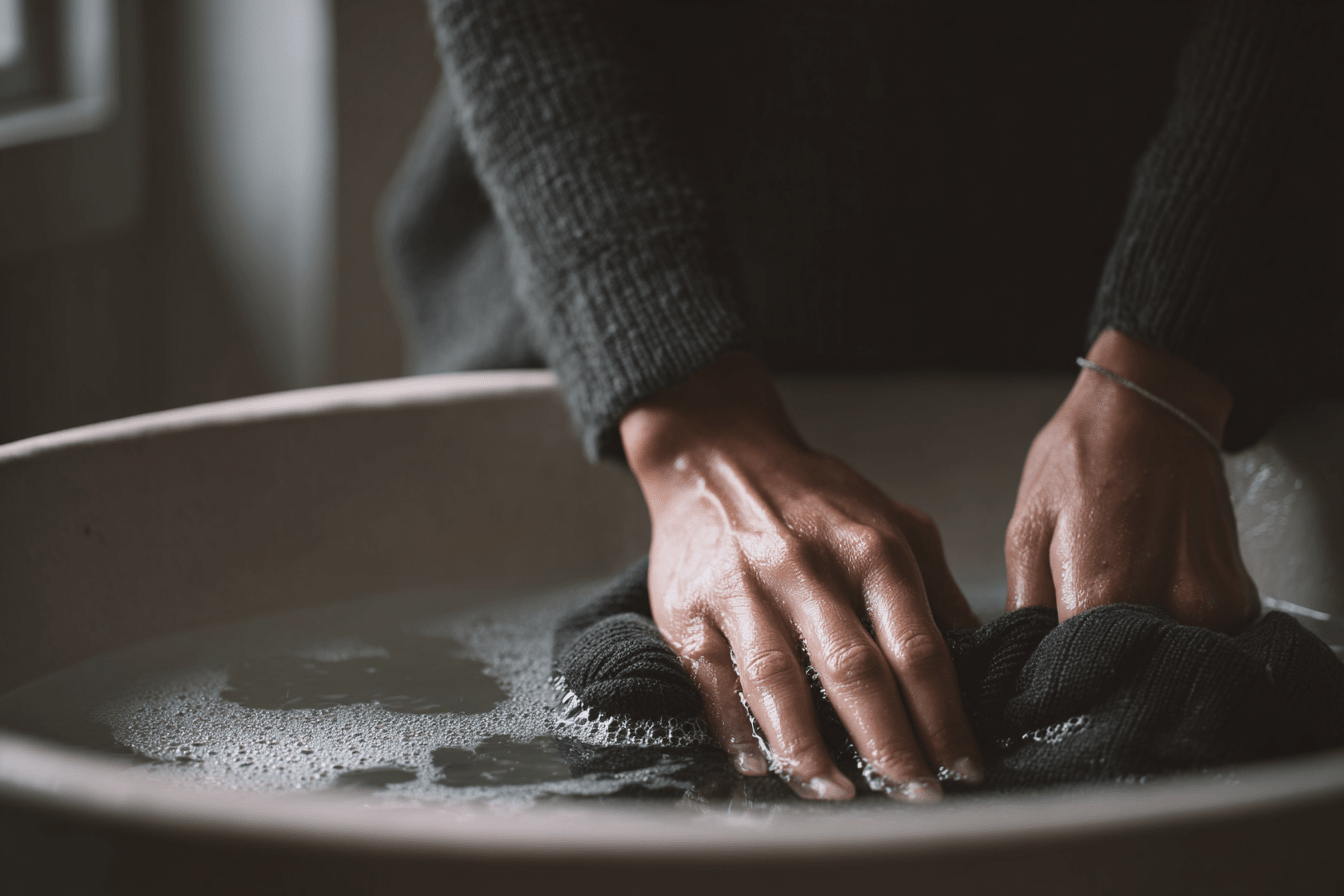
- Fill a sink with lukewarm water. Maximum 30 degrees. Water that is too warm opens the scales on the wool fibre, which leads to felting.
- Add a little wool detergent. One capful, or sometimes less, is enough. Stir briefly until it has dissolved.
- Place the sweater in the water. Gently press it down until it is completely saturated.
- Let it soak for 10 minutes. Don’t rub, don’t scrub, don’t pull. Wool needs time, not force.
- Gently squeeze out the soapy water. Avoid wringing. Press the sweater gently without twisting it.
- Rinse with lukewarm water, then with cold water. Do this at least twice, until the water runs clear.
- Remove the final moisture with a towel. Lay the sweater on a large dry towel, roll up the towel with the sweater inside, and press gently. The excess water will be absorbed into the cloth.
Drying after washing: how to prevent shrinkage and distortion
The drying stage is at least as important as the wash itself. Many kinds of damage happen here, not in the washing machine.
Lay the sweater flat on a dry towel or a flat drying rack. Reshape it to its natural dimensions and let it dry like that, in a place with good ventilation and out of direct sunlight. A wool garment on a hanger or clothesline stretches under its own weight, especially when it is still heavy with water. The shoulders sag, the hem hangs down, and the fit disappears.
The dryer is not an option. High temperatures shrink the fibres and mechanical movement causes felting. Even a low setting on cold air is not recommended. Because of the fibre’s natural properties, a merino sweater will air-dry fairly quickly anyway.
A slightly shrunken sweater can sometimes be saved by wetting it with lukewarm water, laying it flat and gently stretching it back into shape while drying. With severe shrinkage, the damage is usually irreversible.
Common mistakes when washing merino wool
The four causes that most often lead to damage:
- High temperature. Above 30 degrees, the fibres shrink and the fit is lost. According to the official washing instructions from The Woolmark Company, a wool cycle at 30 degrees or a delicate wash with cold water is the right starting point.
- Wrong detergent. Many regular detergents contain enzymes that break down proteins, and wool is made up of the protein keratin. Fabric softener is unnecessary and even undesirable: it leaves a layer behind that reduces the natural breathable properties.
- Wringing, scrubbing or spinning too hard. Friction and twisting cause pilling and felting. Keep the spin speed below 600 and always handle a wet sweater with patience, not force.
- Drying on a hanger or in the dryer. Both will distort or shrink the garment in a single wash. Flat drying on a towel is the only correct method.
How often should you wash a merino sweater?
Much less often than a cotton sweater. Thanks to the antibacterial properties of merino wool, odours and bacteria are limited. In practice, airing it out after wearing is usually enough, on a hanger in a well-ventilated space. Only wash it when the sweater is actually dirty or sweaty, or if it no longer smells fresh after more than a few days.
For a sweater worn regularly under normal conditions, that usually means just a few washes per season. That is not only better for the garment, but also for water use and longevity. A sweater that is washed less often stays looking good for longer.
In conclusion
The right steps for washing a merino sweater are not complicated: low temperature, mild wool detergent, low spin speed, flat drying, no dryer. A good merino sweater is made to last for years, and with this basic routine, that is easy to achieve. If you want more background on why a seamless construction is less likely to pill or wear out, you will find extra context in a sweater that doesn’t pill and in the merino sweater guide. For an overview of the models, see our collection in merino wool, made in Staphorst and designed to last for years.