

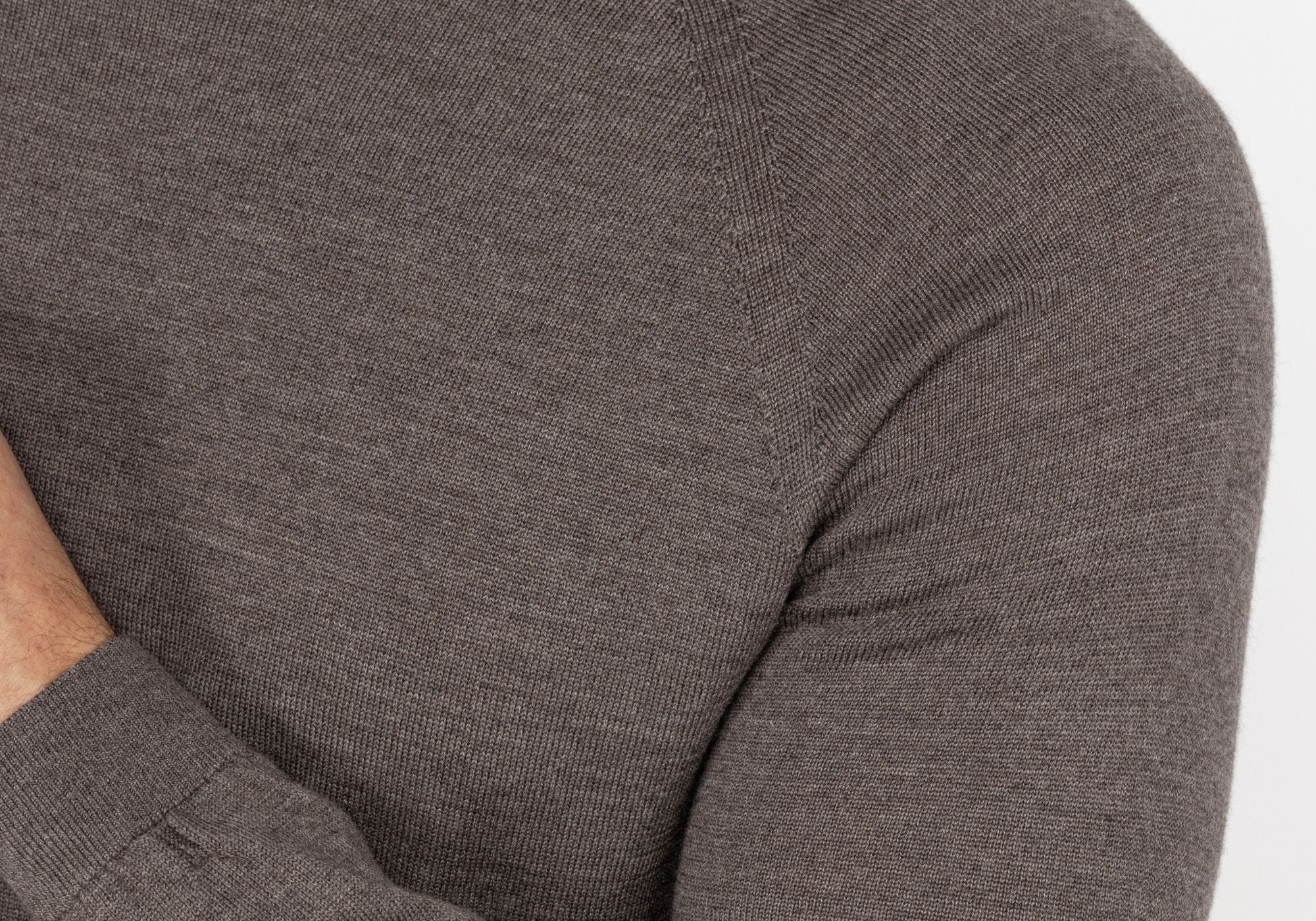
Merino Sweater in September
When do you reach for your sweater during the transition season?
In short:
- September is the true transition season: warm afternoons, cool mornings and evenings. A merino sweater bridges that temperature difference without needing to take it off all day.
- Merino wool regulates temperature naturally. The fiber absorbs moisture up to about 35% of its weight before it feels clammy, according to the Woolmark Company.
- Reach for your merino sweater on cool mornings, evenings outdoors, air conditioning at the office, and when traveling where the weather changes.
- A crew neck is the most versatile choice for the transition season. A turtleneck is your backup for cooler evenings.
- Wear the sweater in layers over a t-shirt or directly on your skin. Merino doesn't itch.
- Wash only when necessary, on a wool wash cycle at 30 degrees, and dry flat.
Early September feels confusing. At two in the afternoon you're walking around in a t-shirt, but as soon as the sun sets there's a chill in the air. You cycle to work in the morning and feel cold, while that same afternoon you're sitting on a terrace sweating. That's the transition season. The transition season sweater is exactly the layer you reach for and put down most often in these weeks, sometimes within an hour. A merino sweater is perfect for this, and below you'll read when to reach for it.
What exactly is the transition season in September?
Late summer isn't a fixed season. During the day it can still be 24 degrees, in the early morning it drops to around 10 degrees. That difference of sometimes more than ten degrees within one day makes choosing clothes difficult. A thick sweater is too warm for the afternoon. A single t-shirt is too cold for the evening. You're looking for something in between.
That's exactly where merino's strength lies. The fiber adapts to the conditions instead of you having to switch clothes. Where a cotton sweater becomes clammy as soon as you get warm, merino keeps things drier. That makes it a logical choice for a transition season sweater, when you never quite know what the day will bring.
Why merino wool works when the weather changes
Merino regulates temperature because the fiber absorbs and releases moisture. The wool is hygroscopic: it absorbs water vapor from the environment and your skin. According to the Woolmark Company factsheet on the breathable properties of wool, wool can absorb up to 35% of its weight in moisture before it feels clammy, and wool moves up to 25% more moisture away from the skin than polyester.
That explains why a merino sweater doesn't quickly become too warm in September. When you get warm, the fiber absorbs the moisture and you release heat. When it cools down, the layer of air between the fibers keeps you warm. Research cited by the Woolmark Company mentions demonstrably better moisture regulation of merino compared to synthetic fibers. In practice you notice this especially in what doesn't happen: no sticky feeling, no cold clammy layer when you stop after cycling.
When do you reach for your merino sweater?
The transition season has a few fixed moments when the sweater naturally comes back. Recognize them, and you'll know right away when to bring it along.
- The morning. Cycling or walking to work before nine o'clock is often cool in September. A merino sweater over a t-shirt is enough, and you don't have to sweat in a jacket.
- The evening outdoors. On a terrace or in the garden the temperature drops quickly after sunset. The sweater goes on, and stays comfortable because merino won't itch on bare arms or neck.
- Indoors with air conditioning. Offices, trains and shops are often heavily cooled in late summer. Warm outside, cold inside: a thin merino sweater bridges that without fuss.
- While traveling. Changeable weather and long days call for a layer that can handle a lot. Merino is suitable for this because you can wear it for several days without it smelling, so you need to pack less.
The common thread: you reach for your transition season sweater on the edges of the day and in air-conditioned spaces, not in the heat of the afternoon.
Which merino sweater for which moment?
Not every sweater fits every moment. For September there are roughly two choices.
A crew neck merino sweater is the most versatile. It's open enough not to get too warm during the day and works both over a t-shirt and directly on your skin. For most days in the transition season, this is the sweater you reach for most often.
A merino wool turtleneck is your backup for cooler evenings and the first real autumn days that sometimes arrive by late September. The high neck closes off the draft at your neck, which helps once the wind picks up.
If you often wear the sweater in layers, pay attention to the length. A sweater that's slightly longer stays in place better over a t-shirt or under a jacket. Meedin offers three lengths based on your height, so the sweater ends in the right place. If you're unsure, check the size and fit guide before you choose.
Caring for your sweater between seasons
During the transition season a sweater goes on and off often, but that doesn't mean it needs to be washed more frequently. Merino is naturally odor-resistant, so usually airing it out is enough. If you do wash it, use a wool wash cycle at 30 degrees, inside out, with a wool detergent without fabric softener. Dry the sweater flat, never in the dryer. More information is on the care page.
If you're preparing your wardrobe for the next season, this connects to building a fall wardrobe, where the same sweaters simply carry over. That's the idea behind a sweater you wear for years instead of just one season.
Conclusion
A transition season sweater isn't a separate purchase for September alone. It's the same merino sweater you wear in winter, used on the moments when the weather fluctuates. Reach for it on cool mornings, on evening terraces, in the air-conditioned train, and while traveling. Choose a crew neck for most days, a turtleneck for cooler evenings, and the right length for how you wear it. That way merino works throughout the transition season without you having to switch clothes.
Frequently asked questions
Can you wear a merino sweater if it's still 22 degrees during the day?
Yes, as long as you choose the right layer. A thin crew neck merino sweater over a t-shirt is fine for the early morning or evening at those temperatures. At the hottest part of the afternoon you simply put it aside. Merino releases moisture, so you feel less stuffy than in cotton.
Does a merino sweater itch on bare skin in late summer?
No. Merino has a fine fiber that doesn't prick, even directly on the skin. That's exactly what makes it suitable for the transition season, when you often wear it without a thick layer underneath.
Crew neck or turtleneck for September?
For most days in September a crew neck is the most versatile choice, because it doesn't get too warm during the day. A turtleneck is nicer on cooler evenings and the first autumn days, when you want to close off the draft at your neck.
Do I need to wash my merino sweater often if I wear it a lot during the transition season?
Usually not. Merino is odor-resistant, so airing it out is often enough. Wash only when necessary, at 30 degrees with a wool wash cycle, and dry the sweater flat.